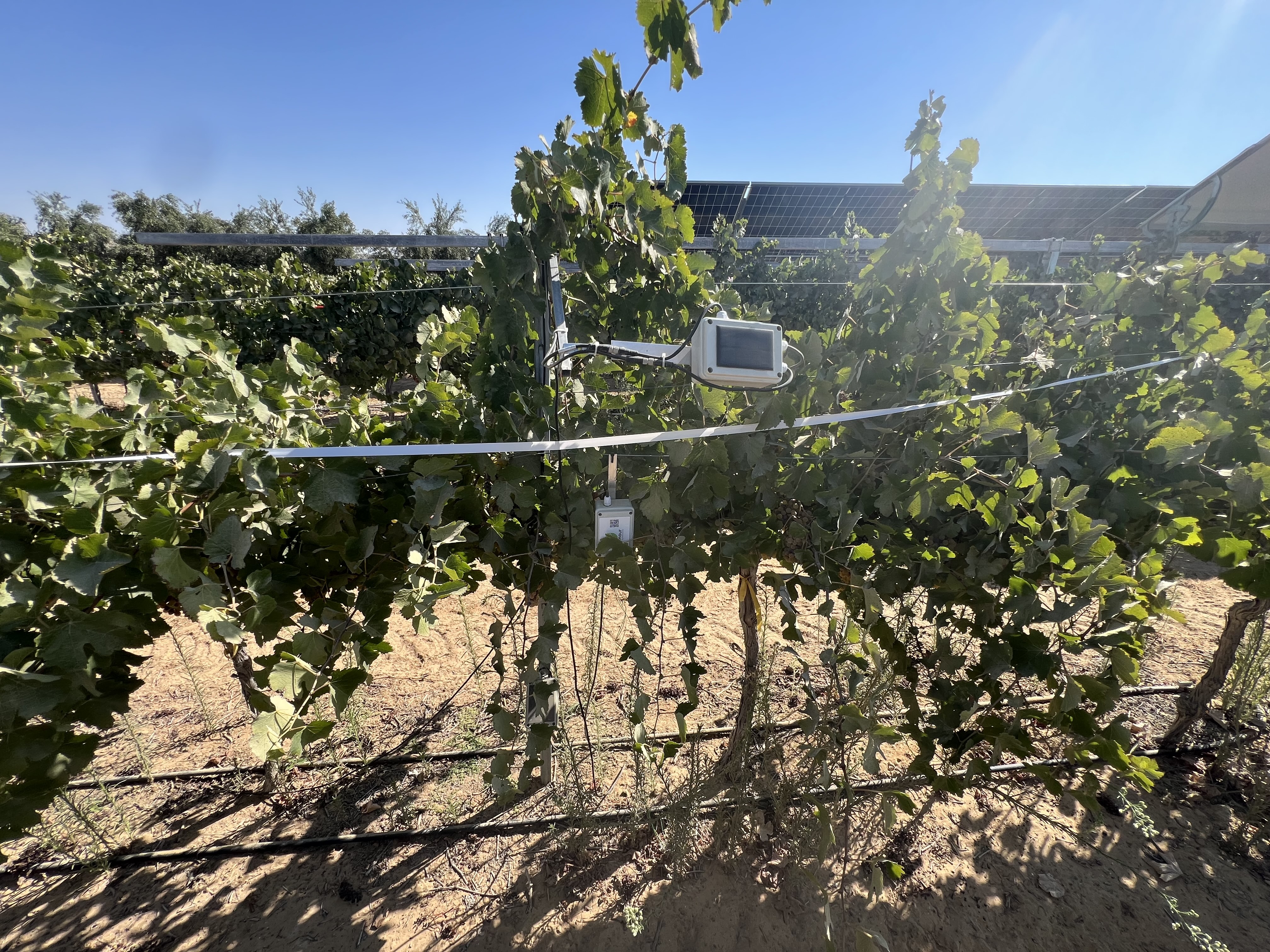
As heatwaves become more frequent and intense, partial shading from agrivoltaic canopies is emerging as a practical tool for protecting crops. The case is backed by some of the strongest recent scientific research in the field.
1. Nature Review — the best scientific reference
Climate Change Impacts and Adaptations of Wine Production — nature.com
Why it's important:
- Probably the most comprehensive recent review.
- Shows how heatwaves, drought, water scarcity, sunburn, and changing ripening patterns threaten vineyards.
- Explicitly discusses shading and photovoltaic panels as adaptation tools.
- An excellent source for statistics and credibility.
A particularly powerful theme from the review: up to 70% of existing wine regions may face substantial climate-related suitability loss under higher warming scenarios.
2. Fraunhofer VitiCult-PVmobil
Climate Resilience Through Agrivoltaics in Vineyards — ise.fraunhofer.de
Why it's useful:
- Directly focused on vineyard protection through agrivoltaics.
- Discusses heat mitigation, delayed ripening, drought adaptation, and climate resilience.
- Very aligned with SolarWine's positioning.
3. Practical Vitivoltaics Research
Designing Vitivoltaic Systems for Hot, Dry Vineyards — ives-openscience.eu
Why we like it:
- Looks at real vineyard performance under PV shading.
- Shows reduced heat stress, maintained yields, higher acidity, slower ripening, and preserved wine quality.
- Very close to the story SolarWine wants to tell.
What this means for growers
Together, these studies describe a clear pattern: well-designed agrivoltaic shading reduces heat stress and water demand while preserving — and sometimes improving — crop quality. For regions facing rising temperatures and water scarcity, that combination is becoming less of an experiment and more of a necessity.