Agrivoltaics is moving beyond panels above crops. The companies that win will be those that can design, operate, and continuously optimize complete agricultural-energy systems.
SolarWine was built for that shift. We are developing an ag-dedicated, end-to-end agrivoltaic platform that connects proprietary canopy architecture, vineyard field data, agronomic knowledge, energy production, and software-driven decision support. The commercial objective is clear: maximize total value per hectare, not only electricity output.
Why vineyards first
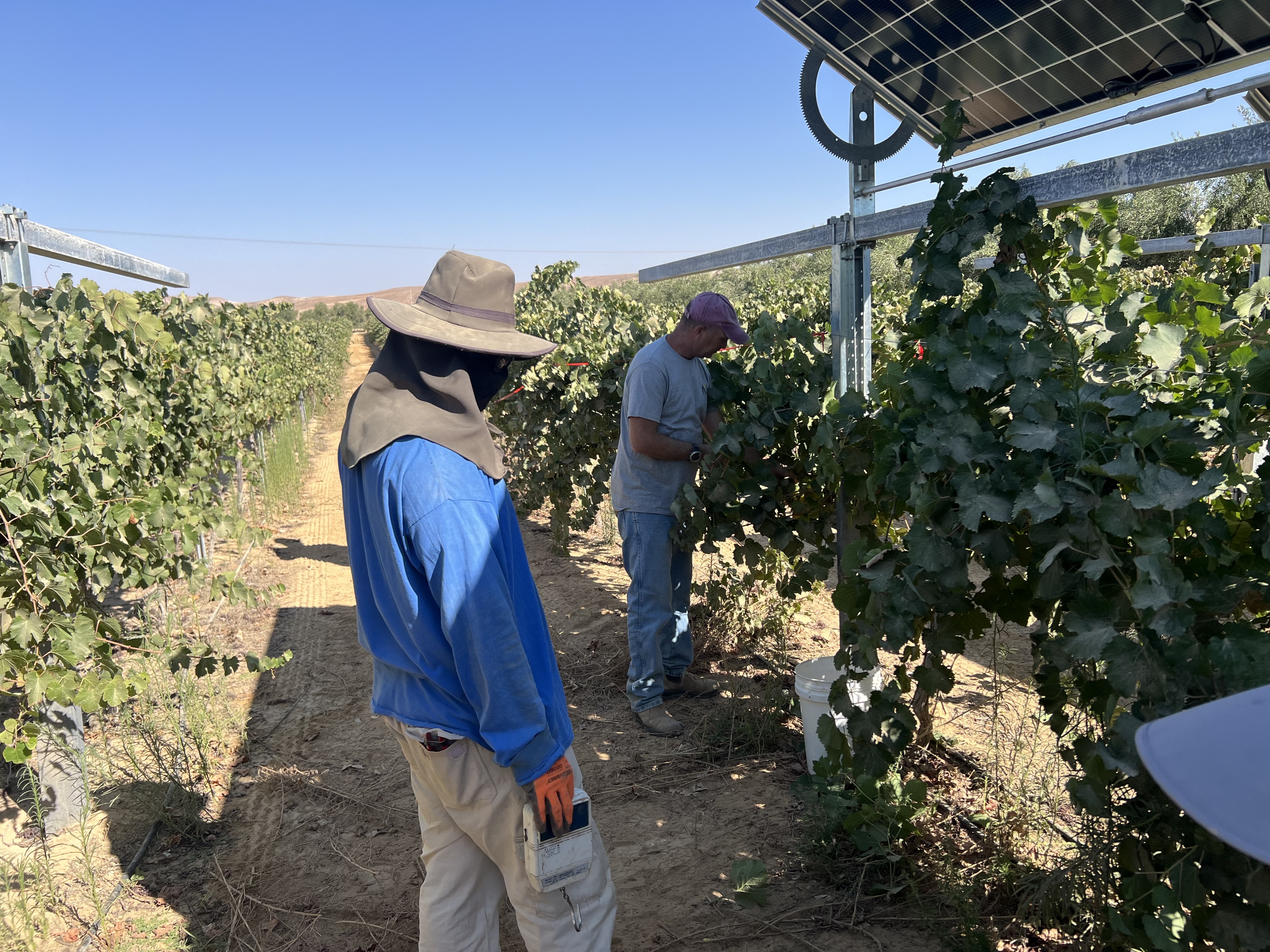
Our beachhead is vineyards because they are one of the most demanding agricultural environments: sensitive to shade, heat, water stress, ripening, fruit quality, access, cultivation, and mechanical harvesting. That is why our canopy is not generic solar infrastructure adapted to agriculture; it is agricultural infrastructure designed to host solar.
This creates a repeatable design advantage. In vineyards, the canopy is engineered around row geometry, crop height, machine movement, shade distribution, and long-term project operations. As SolarWine expands to other high-value plantations, the same farmer-first methodology can be repeated: understand the plant and its operations first, then design the full hardware-software-energy system around them.
Where the moat begins
SolarWine's product is under development, and any meaningful AI advantage in agrivoltaics requires time, proprietary data, and ag-specific heuristic knowledge. After three years of vineyard work, we are building the practical questions future AI must learn to answer: when shade protects value, when light is needed, how water demand changes, and how crop quality and energy can be optimized together.
Today, the moat is strongest in vineyards: proprietary canopy design, proprietary vineyard-response data, and real field learning under agrivoltaic conditions. Every new vineyard, variety, season, and climate condition improves the knowledge base. A grower learns from one field; SolarWine can learn across many.
That knowledge becomes commercially sticky. Once a 25-year agrivoltaic project is designed, financed, installed, and operated around a specific crop strategy, replacing the physical system or operating logic is difficult. Strategic energy partnerships help SolarWine launch faster and with credibility, but long-term defensibility will come from product performance, accumulated agricultural intelligence, and repeatable crop-specific deployment logic.
Not components — a platform
SolarWine is not selling components. We are building a farmer-first agrivoltaic platform: proprietary canopy architecture, agricultural intelligence, and software-driven operations designed to help vineyards today — and other high-value plantations tomorrow — turn the same land into a stronger, more resilient, and more profitable asset.